
A 6.8 magnitude earthquake has hit off the coast of Japan, with its epicentre located some 150 kilometers from the city of Namie in Fukushima prefecture triggering a tsunami alert, RT News reports.

China on Thursday sent several fighter jets and an early warning aircraft to its newly declared air defence zone in the East China Sea as a "defensive measure" after Japan and South Korea said their military planes flew through the area in defiance of Beijing's unilateral move.
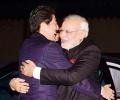
'The regional context and the personal ties between Modi and Japanese Prime Minister Shinzo Abe to a large extent contributed to this dawn of a new era in bilateral relations,' says Srikanth Kondapalli.
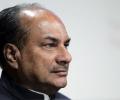
Ways to strengthen military ties and sale of Japanese amphibious aircraft to Indian armed forces are expected to be discussed during the meeting of the Defence Ministers of the two countries in New Delhi in New Delhi.
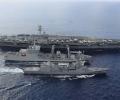
It was for the first time that a Chinese spy ship was detected in Japanese water since a submarine was spotted in 2004. The latest intrusion came less than a week after another Chinese naval vessel sailed near islands at the centre of a Tokyo-Beijing sovereignty dispute in the East China Sea.

The Indian Army has built infrastructure to house 450 tanks and over 22,000 troops in the Eastern Ladakh sector.

Military clashes between China and Japan cannot be ruled out and the People's Liberation Army will fight back if provoked, a top Chinese official said on Monday.

Japan marks the fourth anniversary of a quake-tsunami disaster that swept away thousands of people.

Stricter regulations in US forces industry to look at these countries with a market size of $300 billion

India's voting pattern in the United Nations with regard to the Israel-Palestine conflict is lately marked by a calibrated distancing from Israel, observes Ambassador M K Bhadrakumar.

India and Japan have a shared interest in countervailing China's hegemonic ambitions in Asia. Although neither has an interest in forming an overt anti-China alliance, Tokyo and New Delhi feel increasingly obligated to work together to find ways to guard against a muscular Beijing's power sliding into arrogance, says Brahma Chellaney.
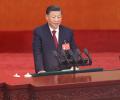
'No Cold War should be reignited and no Ukraine-style crisis should be repeated in Asia'

A 6.6 magnitude earthquake struck off the coast of Taiwan early on Monday, the United States Geological Survey reported. A tsunami as big as three feet was reportedly forecast to hit islands in Japan's far south.

Any move by India to join the US navy for jointly patrolling the disputed South China Sea will be against its national interest, would divide Asian countries and further escalate regional tensions, a state-run Chinese daily said on Friday.

The rains were being caused due to a cyclonic circulation lying over north east Arabian sea and adjoining Saurashtra and Kutch regions, the IMD said in its bulletin.

The prime minister's outreach to Japan is a recognition of the civilisational potential that the two nations hold and can wield in evolving an era of 'Asianism' in global politics, says Anirban Ganguly.

An international tribunal in the Hague has ruled in favour of the Philippines.
.jpg)
India and Japan on Monday agreed to enhance their defence and strategic cooperation to a new level during talks between Prime Minister Narendra Modi and his counterpart Shinzo Abe, who also decided to speed up negotiations on civil nuclear deal that could not be concluded now.

US Vice President Kamala Harris would host a separate meeting with the prime ministers of three Quad countries -- India, Australia and Japan -- at the White House to discuss with them the important factors for democracies to go forward, officials said.
India will not join Japan's efforts to build a strategic counterweight against China along with the United States as it follows an independent foreign policy, the Chinese state media said on Tuesday, ahead of Prime Minister Narendra Modi's maiden visit to the US.

The 19th edition of the Malabar naval exercise saw the Indian, US and Japanese maritime forces participated jointly in the routine.

Blinken will also attend a meeting of the foreign ministers of the Quad grouping and will hold bilateral talks with his Indian counterpart S Jaishankar in Delhi.

Chinese foreign ministry spokesperson Mao Ning said China believes that state-to-state interactions should be in line with the trend of the time which is peace and development rather than exclusivity.

A day ahead of the G20 Summit, it was not very clear whether a consensus on the text to describe the Ukraine crisis in the joint leaders' declaration was achieved with China appearing to emerge as the main stumbling block to bridge the differences on the contentious issue.
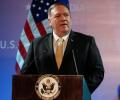
Pompeo, during a Congressional hearing on Thursday, told the members of the House Foreign Affairs Committee that 'the actions are entirely consistent with what they have been signalling to the world for decades you might even argue since 1989, but certainly since General Secretary Xi came to power'.

China claims nearly all of the disputed South China Sea, though Taiwan, the Philippines, Brunei, Malaysia and Vietnam all claim parts of it. Beijing has built artificial islands and military installations in the South China Sea. Beijing is also involved in a maritime dispute with Japan over the East China Sea.

Prime Minister Narendra Modi's remarks in Japan of an "expansionist" mindset of some countries have riled the Chinese official media which said the Indian leader is more "intimate with Tokyo emotionally".

Hailing India for keeping "neutral stand" over the South China Sea issue despite pressure from the US and Japan, state-run Chinese media on Wednesday said there are some contradictions and frictions between the two nations but the overall bilateral relations have been developing smoothly.

In a diplomatic breakthrough, Chinese President Xi Jinping and Japanese Premier Shinzo Abe on Monday held their maiden talks, marking the "first step" towards mending ties between the two Asian rivals after years of territorial disputes and animosity due to wartime history.
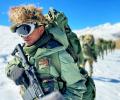
The United States will continue to support India with equipment and other things it needs along the Line of Actual Control (LAC) with China, a top American admiral has told lawmakers, asserting that Washington and New Delhi share a 'tremendous partnership'.

Prime Minister Narendra Modi enjoys a close relationship with Shinzo Abe. For Abe, "a strong India is in the best interest of Japan, and a strong Japan is in the best interest of India."
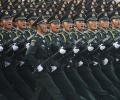
It will be a historic and strategic mistake to insist on taking China as a threat and adversary, or even an enemy, Chinese Defence Minister General Wei Fengh said on Sunday as he underlined that the China-United States relationship is at a critical and crucial juncture.

When stars travel, they make lovely pictures on social media.

In the opinion piece after the summit, the leaders said the cooperation, known as "the Quad," was born in crisis. It became a diplomatic dialogue in 2007 and was reborn in 2017.

'Our record and our actions and stances is fairly clear and by criticising it repeatedly, it doesn't make us less credible'
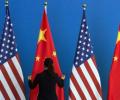
Blinken also underlined that diplomacy is the only way to definitively end the Russian conflict in Ukraine.

Aseem Chhabra rates the movies he's watched in 2023, and tells you where you can watch them!

New Delhi's growing defence partnership with Tokyo could take wing with the US-2 (Utility Seaplane Mark 2), a one-of-a-kind amphibious aircraft that has Indian naval planners goggle-eyed.

China, which has territorial disputes with many countries in the strategic Indo-Pacific region, has been opposing the Quad alliance since its formation.
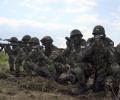
Russia said on Monday that the Vostok 2022 military exercises will be held from September 1 to 7 in different locations in the Far East and the Sea of Japan and involve more than 50,000 troops from China, India and several other countries.
